Shoes are the most underrated piece of badminton equipment. Badminton involves constant lunges, sharp sideways stops and jumps on a smooth indoor floor, and the wrong shoe is the most common cause of rolled ankles and sore knees among club players. A good badminton shoe does three things: it grips the court, it stops your foot rolling on sideways movements, and it cushions your landings without making you feel slow.
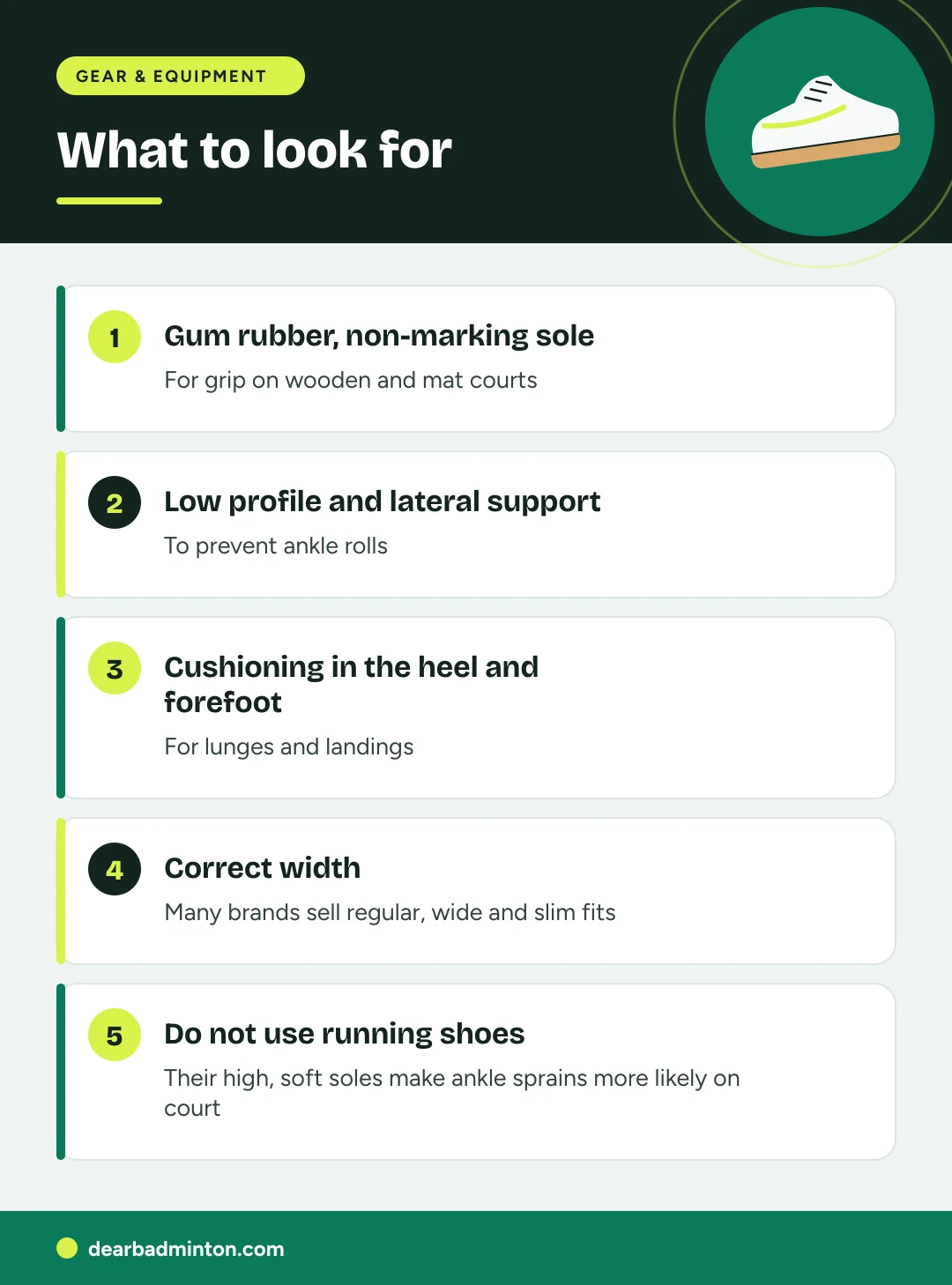
What to look for
- Gum rubber, non-marking sole for grip on wooden and mat courts
- Low profile and lateral support to prevent ankle rolls
- Cushioning in the heel and forefoot for lunges and landings
- Correct width: many brands sell regular, wide and slim fits
- Do not use running shoes: their high, soft soles make ankle sprains more likely on court
Our picks for 2026
We chose these shoes on the basis of manufacturer specifications, fit options and the consensus of coaches and experienced players; we have not lab-tested them and do not accept payment for placement. Prices are approximate US prices at the time of writing and vary by retailer, size and colour.
| Shoe | Best for | Fit options | Approx. price |
|---|---|---|---|
| Yonex Power Cushion 65 Z (current: 65 Z4) | Best all-rounder | Regular, wide, slim, women’s | About $150 to $170 |
| Yonex Power Cushion Aerus Z2 | Light, fast players | Regular | About $175 |
| Yonex Power Cushion Comfort Z3 | Maximum cushioning, joint comfort | Regular, wide | About $145 |
| Yonex Power Cushion Eclipsion Z3 | Stability and support | Regular | About $200 |
| Victor P9200 series | Value tournament shoe, snug heel | Regular | About $130 |
| Li-Ning BladeSabre Max | Best under $120 | Regular | About $110 |
| Babolat Shadow Tour | Value badminton shoe with a Michelin outsole | Regular | Varies |
Best overall: Yonex Power Cushion 65 Z
The 65 Z line has been Yonex’s best-selling all-round shoe for several generations, and the current version is the 65 Z4. It balances cushioning and stability, and it is available in regular, wide and slim fits, which makes it the easiest shoe to recommend without knowing your feet. Choose the wide version if standard shoes pinch across the forefoot.
Best lightweight: Yonex Aerus Z2
One of the lightest shoes in the Yonex range, built for players who rely on first-step speed. The trade-off is slightly less cushioning and support than the 65 Z or Eclipsion, so it suits lighter players and fast doubles specialists.
Best cushioning: Yonex Comfort Z3
If your knees or heels complain after long sessions, the Comfort Z line prioritises shock absorption with a softer ride.
Best stability: Yonex Eclipsion Z3
The most supportive of the Yonex Z range, with a firmer, more locked-in feel. A good choice for heavier players, singles players and anyone with a history of ankle sprains.
Best value: Victor P9200 and Li-Ning BladeSabre Max
Both deliver proper badminton construction (gum soles, lateral support, cushioning) for noticeably less money than the Yonex flagships. Victor shoes often run snug, so try a size up if you are between sizes.
How to choose badminton shoes
Grip and sole
Look for a gum rubber, non-marking outsole. Many sports halls require non-marking soles, and gum rubber grips sprung wood and court mats better than the harder rubber used on outdoor shoes.
Lateral stability
Badminton is played sideways and diagonally as much as forwards. A low heel-to-floor height, a firm heel counter and support around the midfoot keep your foot over the sole when you lunge or change direction.
Cushioning
Heavier players and those who play long sessions benefit from more cushioning. Lighter, faster players may prefer a firmer, lower shoe that gives more court feel.
Fit and width
Your toes should have a thumb’s width of space and the heel should not lift when you lunge. Asian brands’ regular fits are often narrower than Western running shoes; if your feet are wide, choose a model sold in a wide fit.
Weight
Lighter shoes feel faster but usually offer less support. For most club players, stability matters more than a few grams.
Badminton shoes vs other shoes
| Shoe type | Suitable for badminton? | Why |
|---|---|---|
| Badminton shoes | Yes | Gum sole, low profile, lateral support |
| Indoor court shoes (volleyball, squash) | Yes, a good alternative | Similar sole and support |
| Running shoes | No | High, soft heel built for straight-line running; easy to roll an ankle sideways |
| Tennis shoes | Not ideal | Heavier, often with harder outdoor soles that grip poorly on wooden floors and may mark |
| Casual sneakers or skate shoes | No | Little cushioning or lateral support |
Can you use tennis shoes for badminton?
For an occasional casual game, yes, if the sole is non-marking. For regular play, no. Tennis shoes are built for sliding and for abrasive outdoor courts; they are heavier and their soles grip less well on indoor badminton surfaces. If you already own indoor court shoes for volleyball or squash, they are a better stopgap.
How long do badminton shoes last?
It depends on how often you play and how you move. As a guide:
| How often you play | Typical replacement |
|---|---|
| Once a week | About 12 months |
| Two or three times a week | About 6 to 9 months |
| Four or more times a week, or competitive | About 3 to 6 months |
Replace them sooner if you notice any of these: smooth patches on the sole where the pattern has worn away, especially under the big toe; slipping on court; flattened cushioning that no longer feels springy; the upper splitting along the side; or new aches in your knees, shins or heels.
Make them last longer by wearing them only on court, keeping them out of hot cars, and letting them dry naturally after each session.
Badminton shoe FAQ
Are badminton shoes worth it?
If you play more than occasionally, yes. They are the single most effective piece of equipment for preventing ankle injuries.
What are the best badminton shoes for wide feet?
Choose a model sold in a wide fit, such as the Yonex Power Cushion 65 Z Wide or Comfort Z Wide, and try them on with the socks you play in.
Can I play badminton barefoot or in socks?
No. Without grip and support you are very likely to slip or injure your feet.
What else do I need?
See our badminton equipment guide and how to choose a badminton racket.